
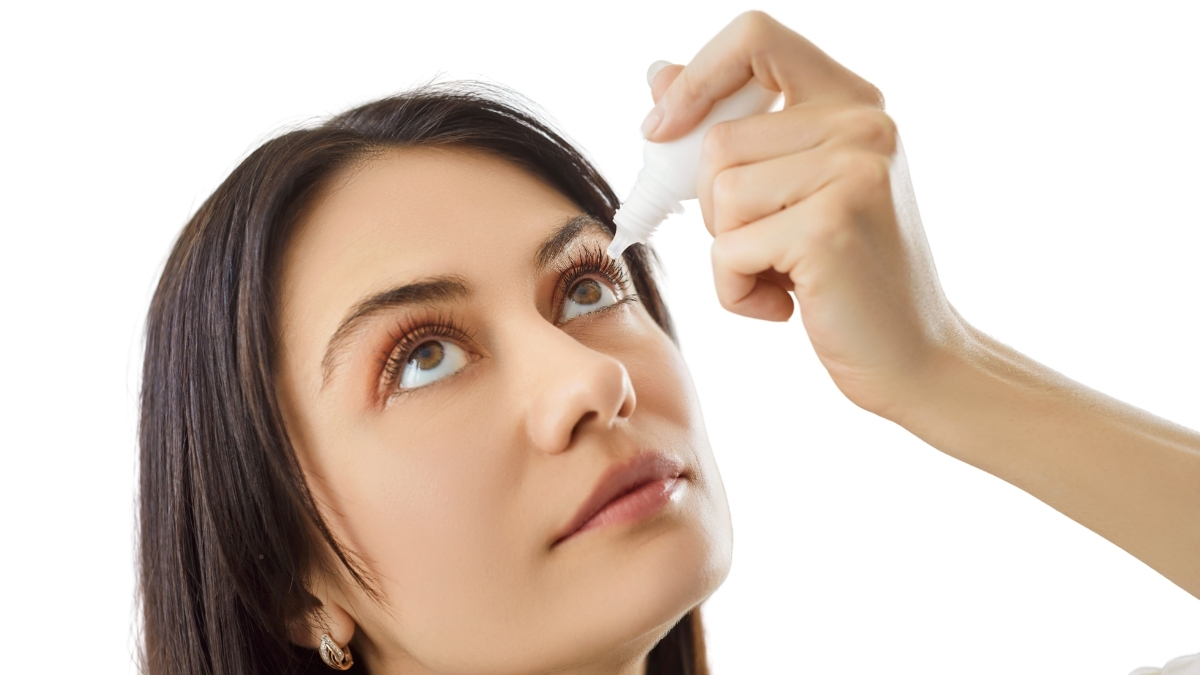
Dry eye is one of the most common eye diseases of our time. It manifests with burning, stinging, redness, foreign body sensation, and blurred vision. Tears don’t just moisturize; they also protect against microbes, ensure the eye’s transparency, and enable clear vision. Therefore, dry eye is not a simple discomfort but a serious condition that can lead to permanent damage if left untreated.
Anatomy and Physiology of Tears
Tears are produced by the main lacrimal gland located in the upper outer part of the eye and accessory glands (Krause, Wolfring) on the inner surface of the eyelids. After spreading over the eye surface, they are collected through small holes called puncta at the inner corner of the eye, reach the lacrimal sac through canaliculi, and flow into the nasal cavity through the nasolacrimal duct. This is why our nose runs when we cry.
Tears consist of three layers:
- Lipid layer: Secreted by Meibomian glands at the base of eyelashes, prevents evaporation.
- Aqueous (water) layer: Comes from lacrimal glands, provides moisture and oxygen.
- Mucus layer: Secreted by goblet cells, ensures even distribution of tears on the surface.
A person blinks an average of 16-20 times per minute. This reflex distributes tears evenly on the surface and initiates their flow to the nose. In front of a screen, this number drops to 3-4; tears don’t distribute properly and dryness can develop.
Dry Eye Etiology
Tear film disorders
- Meibomian gland blockage → oil layer is deficient, evaporation increases.
- Decreased tear production → aging, hormonal changes, certain medications.
Rheumatological and autoimmune diseases
- Sjögren’s syndrome: Can lead to the most severe dry eye presentation.
- Connective tissue diseases such as rheumatoid arthritis, lupus, ankylosing spondylitis can also affect tear glands.
Digital screens
Blinking decreases in front of screens, tears don’t spread adequately on the surface.
Environmental factors
Air conditioning and dry air rapidly evaporate tears. Wind, cigarette smoke, and air pollution are additional factors.
Surgical factors
- Laser surgeries (LASIK, SMILE): Corneal nerves are cut, temporary dryness may occur.
- Eyelid surgeries (blepharoplasty, ptosis): If the eyelid doesn’t close completely, dryness can develop.
- Cataract and glaucoma surgeries: Post-operative inflammation and nerve damage can contribute to dryness.
Systemic factors and medications
- Drinking little water
- Isotretinoin (Roaccutane)
- Antihistamines, antidepressants, birth control pills
- Hormonal changes (especially post-menopause)
Protection from Dry Eye
- Apply the 20-20-20 rule.
- Blink consciously.
- Drink approximately 2 liters of water daily.
- Spend time outdoors.
- Stay away from air-conditioned and dry environments.
- Regular eye examinations for those with rheumatological diseases.
Current Treatment Methods
- Artificial tear drops: May be sufficient in mild cases; preservative-free forms are preferred for long-term use.
- Lipid-based drops: Can reduce evaporation in oil layer deficiency.
- Autologous serum and PRP drops: Can help repair the eye surface in severe dry eye.
- Immunomodulator drops (cyclosporine, lifitegrast): Suppress underlying inflammation; can support tear glands long-term.
- IPL and thermal pulsation treatments: Can help open blockages in Meibomian glands and regulate oil secretion.
- Supplements and support: Omega-3, lutein, zeaxanthin, vitamin D; also water consumption.
Conclusion
Dry eye disease is a multifactorial disease related to disorders in tear production, eyelid functions, rheumatological diseases, surgeries, environmental factors, and medications. When the etiology is properly understood, prevention and treatment become more effective. Today, there is a wide range of options from simple drops to biological agents and device-based treatments.
References
- Clinical Ophthalmology (2024) – Autoimmune diseases and dry eye prevalence
- The Ocular Surface (2025) – Digital screen use and tear film quality
- American Journal of Ophthalmology (2023) – Dry eye prevalence in air-conditioned office workers
- British Journal of Ophthalmology (2024) – Efficacy of autologous serum eye drops