
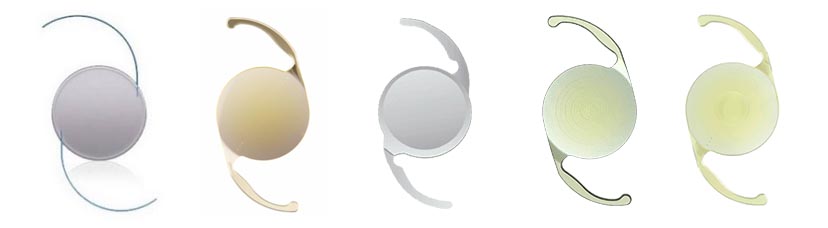
Premium Lens Treatment (Trifocal, EDOF)
General Information
Premium lenses are lenses used during cataract surgery or to reduce dependence on glasses, providing clear vision at both distance and near.
Who is it Suitable For?
- Patients over 40 who want to improve both distance and near vision simultaneously
- Individuals with myopia, astigmatism, and hyperopia prescriptions
- Those who will have cataract surgery and want to live independently of glasses
- Patients whose eye structure is suitable for these lenses
Lens Selection
Monofocal Lenses: Provide clear vision at distance. Distance vision is close to the natural lens. However, they do not provide vision at near and intermediate distances. Near glasses are needed after surgery.
Trifocal Lenses: Provide clarity at three different focal distances (distance, intermediate, and near). They offer independence from glasses in daily life. However, side effects such as night light reflections may occur in some patients.
EDOF (Extended Depth of Focus) Lenses: Show distance at a clarity quite close to the natural eye lens. They provide a wide depth of focus at intermediate distance, especially providing comfort in computer and screen use. Daily reading and tasks can be done comfortably at near distance; however, a low-numbered reading glasses may be needed for very small print or very close distances. Night light reflection and halo complaints are usually not seen.
Stages of the Procedure
- Anesthesia: Local anesthesia is applied with eye drops.
- Removal of Old Lens: The old non-functional lens is removed.
- Placement of Premium Lens: An appropriate premium lens (multifocal, trifocal, or EDOF) is placed. All procedures usually take 10-15 minutes.
Recovery Process
- Vision usually begins to clear within the first few days.
- Mild stinging or discomfort may occur on the first day but passes very quickly.
- Regular follow-ups and drops recommended by the doctor should be used.
Advantages
- Provides clear vision without glasses at both near, distance, and intermediate distances.
- It is a permanent solution and does not require replacement for life.
- In patients with cataracts, it is performed together with cataract treatment.
- Prescriptions of individuals without cataracts can be corrected.
- With proper patient selection, satisfaction rates are very high.
Limitations
- May not be suitable for every patient, especially depending on corneal structure.
- Side effects such as night light glare or contrast loss may occur in some patients.
