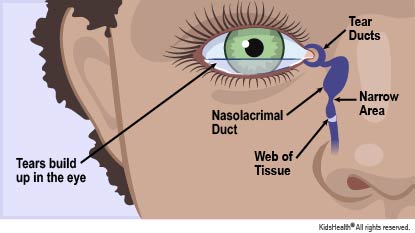
Tear Duct Obstruction
- General Information
Tear duct obstruction occurs as a result of narrowing or complete blockage of the channels that allow tears to flow to the nose. It can manifest itself with constant tearing, crusting, and recurring infections. It can be congenital or develop later. - Treatment Methods
- In babies, massage and follow-up are usually sufficient.
- In adults, canal opening, silicone tube placement, or surgery (dacryocystorhinostomy – DCR) can be applied depending on the location and degree of obstruction.
- If there is an infection, medical treatment is planned first.
- Recovery Process
- Tearing complaints usually decrease shortly after the intervention.
- In patients with silicone tube placement, the tube is removed after a few months.
- Post-surgical follow-ups should be done regularly.
- Advantages
- Constant eye tearing and crusting complaints are eliminated.
- Recurring eye infections are prevented.
- Daily life comfort significantly increases.
- Limitations
- Not every type of obstruction can be opened with simple methods.
- Rarely, obstruction may recur and additional intervention may be needed.
- Post-surgical recovery may vary from person to person.