
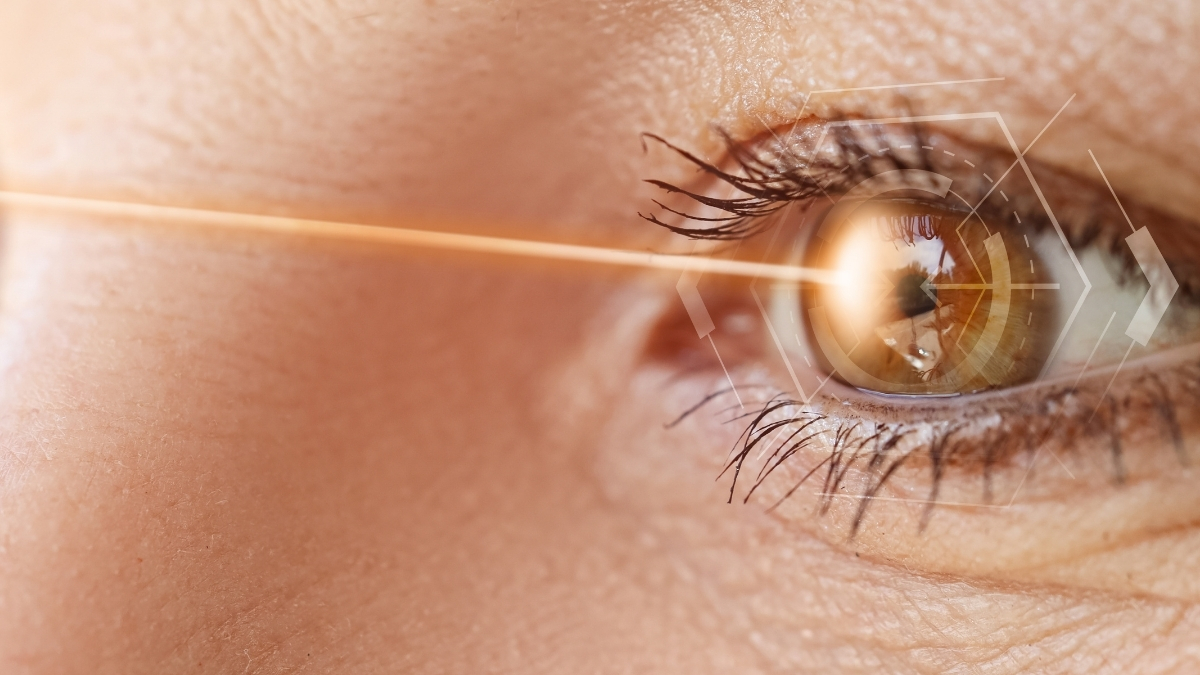
iLASIK, FemtoLASIK and LASIK
Modern corneal flap laser treatments
LASIK is a laser treatment applied by creating a thin flap in the cornea to correct myopia, hyperopia, and astigmatism. The method has been used for many years, and with the advancement of technology, different application methods have emerged.
Previously, the flap was prepared with a blade device called a mechanical microkeratome. This method has largely been abandoned today and replaced by femtosecond laser technology. FemtoLASIK and iLASIK used in current practice essentially refer to the same method; the flap is created with a femtosecond laser instead of a blade. “iLASIK” is the brand/naming difference that some clinics give to this femtosecond laser-assisted LASIK application.
Who is it Suitable For?
- Patients with regular corneal topography
- Those with sufficient corneal thickness for LASIK
- Patients with moderate to high levels of myopia, astigmatism, or hyperopia
- Individuals without significant dry eye complaints
- Patients seeking rapid visual recovery
In suitability assessment, corneal thickness, surface regularity, and tear film functions are examined in detail.
Stages of the Procedure
1. Local anesthetic drops
The eye surface is numbed with drops. No pain is felt during the procedure.
2. Flap creation
- Classic LASIK: The flap is prepared with a mechanical microkeratome (now rarely used).
- FemtoLASIK / iLASIK: The flap is created blade-free with a femtosecond laser.
After the flap is created, the corneal surface is opened and ready for excimer laser application.
3. Excimer laser application
The corneal stroma is reshaped with a laser according to the refractive error. This stage usually takes a few seconds.
4. Flap closure
After the laser application is completed, the flap is placed back in its original position thanks to its natural adhesion property. No sutures are needed.
Recovery Process
- Vision usually becomes significantly clearer within the first 24 hours.
- Burning, stinging, and tearing sensation lasting 3–4 hours may occur after the procedure.
- Use of protective glasses on the first night is recommended.
- Daily activities can usually be resumed in a short time.
- Visual clarity further stabilizes in the following days.
Advantages
- Provides rapid visual recovery.
- Pain level is quite low.
- In FemtoLASIK/iLASIK, flap thickness and center are controlled with high precision.
- Visual comfort is usually achieved within the first day after the procedure.
Limitations
- May not be suitable for patients with thin corneas.
- Flap structure may be a disadvantage in high-trauma-risk occupations.
- Increase in dry eye complaints may be seen.
FemtoLASIK and iLASIK are reliable methods that have become the standard in modern eye laser surgery and provide rapid recovery. Appropriate patient selection and correct preoperative evaluation are the most important factors determining success.